At least sixty Ethiopian Orthodox Christians were killed in attacks in the Arsi Zone of the Oromia Region in late October. Muslims and Christians had lived peacefully alongside one another in this area for a long time. In recent years, tensions have risen due to ethnic and religious attacks, discrimination against Christians, and a lack of protection from the government. During the most recent attacks, homes were set on fire and businesses destroyed as armed groups surrounded Orthodox communities..
According to international media reports, the regional government and an alliance of rebel groups are blaming each other for the attacks. Victims, including women, children and elderly people, were killed during a series of violent attacks in late October 2026 in the Merti and Shirka woredas (administrative districts) of the Arsi Zone in the Oromia Region. This was reported by The Reporter Magazine, citing a statement from the Ethiopian Orthodox Tewahedo Church.
The Reporter writes that on October 20th, fourteen members of the Ethiopian Orthodox Church were murdered in Merti woreda. On October 24th, a new large-scale attack in three areas of Shirka woreda claimed another 46 lives. Twenty homes were engulfed in flames, and dozens of people had to be taken to hospital with serious injuries, many of them in critical condition.
Violence against the orthodox community
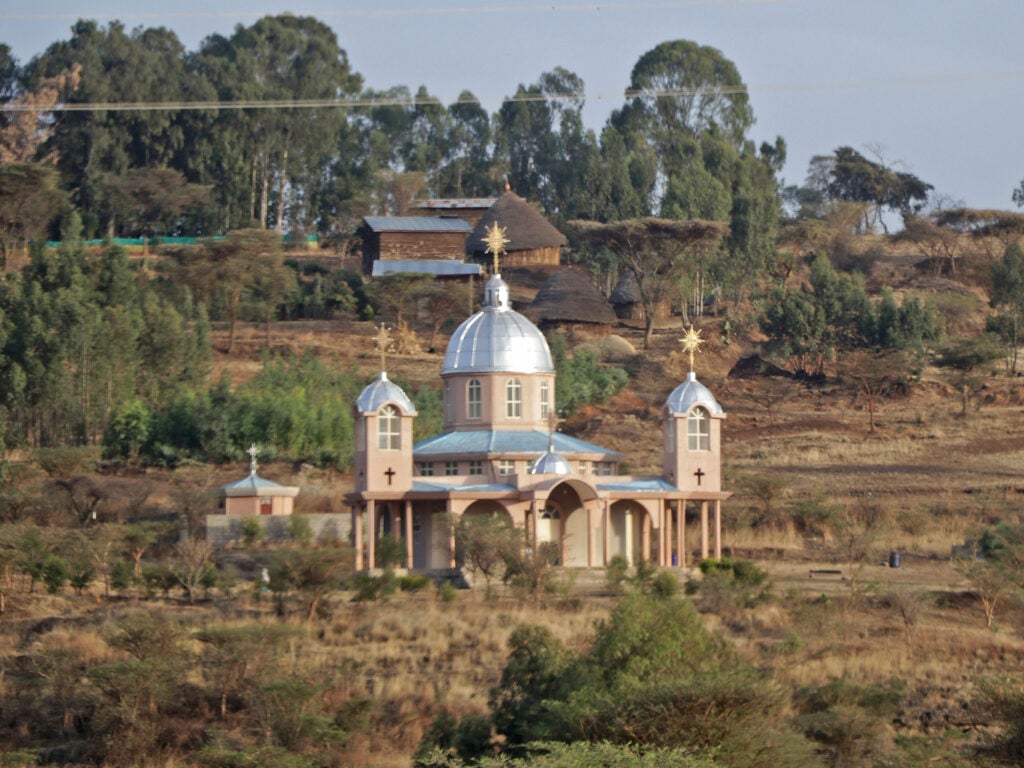
The Arsi Zone, located in the Oromia Region, is predominantly inhabited by Muslim communities. Within this area are smaller communities of believers belonging to the Ethiopian Orthodox Tewahedo Church. The population of Shirka woreda can be broadly divided into 55% Muslims and 45% Christians. The majority of the Christians belong to the Ethiopian Orthodox Church.
Historically, these communities lived together in relative peace. According to local sources, tensions have been increasing for some time in this area, which Christian in the past was predominantly Orthodox. According to The Africa Report, Christians in the area have been subjected to ongoing violence for quite some time.
In 2025, 25 people were killed. The violence continued into 2026, claiming many more lives. In February 2026, violent attacks took place in the eastern part of the Arsi Zone, in which more than twenty Orthodox Christians and one security guard were killed. Violence between May 31st and June 2026 claimed more than 50 lives and resulted in the destruction of the historic Teleta Holy Gabriel Church. Nearly three hundred people were displaced.
According to the Armed Conflict Location & Event Data Project (ACLED), the violence is believed to be religiously motivated and specifically targeted Orthodox Christians, referring to reports of the looting of an Orthodox church. ACLED reported that the number of attacks on Orthodox Christians in the region has increased since February 2023, with the violence intensifying over the past year.
“With minimal government protection, these Orthodox communities are extremely vulnerable.”
Who is responsible?
It is not yet clear whether the Oromo Liberation Army (OLA), the main rebel movement operating in Oromia, was involved in the attacks. Neither the local authorities nor the Ethiopian Orthodox Church have identified or named any group as being responsible.
The OLA is fighting against the federal government. The OLA is not religiously motivated and focuses primarily on self-determination and political autonomy for the Oromo ethnic group. According to The Africa Report, many Oromo believe that everyone who adheres to Orthodox Christianity belongs to the Amhara people. However, this is a misconception, since the Ethiopian Orthodox Church is widespread among many ethnic groups in Ethiopia, including the Oromo, Tigrayans and Gurage.
The Amhara people are being targeted both because of their ethnic identity and because of their Orthodox Christian faith. The situation involves a complex combination of historical tensions, political exclusion and cultural differences, all of which have been exacerbated by recent political developments in Ethiopia.
In recent years, ethnic Oromo people have also been killed during attacks. This shows that the attacks are not solely about ethnicity, but also target the Orthodox Christian background of the victims. Perpetrators regard them as conservative and ideologically connected to the Church, making them targets. According to sources at Open Doors, the attacks are therefore not random but organised and specifically targeted.
According to Fikiru Mehari*, persecution expert for East Africa, many attacks are aimed at Orthodox communities. “These attacks often target church members and deliberately target church leaders,” he explains. “What concerns us is that this violence exploits a particular weakness: the lack of effective law enforcement in the region. With minimal government protection, these Orthodox communities are extremely vulnerable.”
Broader conflict as a background
Oromia is Ethiopia’s largest and most populous region and has long been the centre of a prolonged insurgency involving the Oromo Liberation Army. Tensions between Muslim, Protestant and Orthodox communities repeatedly arise in Oromia.
These attacks are taking place against the backdrop of the broader conflict in northern Ethiopia, where the Tigray People’s Liberation Front (TPLF) and the Ethiopian federal government are engaged in a conflict. The TPLF has joined the seven-group ‘Alliance for Survival’, which aims to overthrow Prime Minister Abiy Ahmed, who is of Oromo origin.
In late October, fighting also broke out between the Oromo and Somali communities in the southern town of Moyale, on the border between Ethiopia and Kenya. The fighting has claimed the lives of at least nine people and forced more than 50,000 people to flee to Kenya. According to sources, the conflict erupted after the Ethiopian flag in the town was replaced with Somali flags.
Christian persecution in Ethiopia
Persecution in Ethiopia is complex and multifaceted, shaped by a combination of historical events, religious dominance, regional dynamics and ongoing political instability. The Ethiopian Orthodox Church, which has deep-rooted historical ties to the state, has long influenced the country’s national identity.
Highly conservative movements within the Orthodox Church regularly portray Protestant and evangelical Christians as foreign and unpatriotic. This leads to widespread stigmatisation and pressure, particularly against Christians who leave the Orthodox Church and convert to a Protestant denomination.
Converts from Islam, particularly in eastern and southeastern Ethiopia, face severe hostility, ranging from rejection by their families to physical violence. In Muslim-majority regions, such as the Somali Regional State and parts of Oromia, various Christian groups, from Orthodox believers to converts, face pressure. Persecution in these areas takes the form of discrimination and violence against Christians, as well as the destruction of churches.
These patterns of persecution are further intensified by Ethiopia’s fragile security situation. In conflict-affected areas such as Tigray, Oromia and Amhara, the breakdown of public order allows perpetrators to operate freely and with impunity.
Ethiopia ranks 36th on the World Watch List.
Join us in prayer!
- Pray for peace and security in the Oromia Region.
- Pray that the government will intervene, work towards peace and security, and hold those responsible accountable.
- Pray for those who have lost loved ones, their homes and their businesses. Ask God to bring emotional, physical and spiritual healing, as well as comfort.
- Pray for church leaders to respond in a biblical way.
- Pray for the attackers.