A recent field report from Open Doors’ partners shows that the church is under significant pressure, particularly in central and southern Mali. Jihadist groups are forcing churches to pay a special tax—the jizya. The alternative is to close their doors under threat of violence..
Non-aggression treaties
Jizya is a tax specifically imposed on non-Muslims that was introduced during the time of Muhammad. Throughout history and to this day, this compulsory tax has been enforced, often as an incentive for people of other faiths to convert to Islam.
In Mali, one of Africa’s poorest countries, jihadist groups hold sway primarily in rural areas in the central and southern parts of the country. They fill the power vacuum in those areas and act as a kind of alternative government.
“There are people in our communities who no longer even have enough to eat because they have given everything they had to the jihadists.”
A local contact said: “The first reports we heard of churches being taxed date back to 2018, when militant Islamist groups began entering into so-called ‘non-aggression agreements’ with villages.”
The signing of the non-aggression agreements gave the militant Islamist groups permission to establish a presence in the villages. They claimed this was necessary to protect the communities from “injustice, the impunity endured by people in Mali, and any other form of aggression or oppression.”
Branded as enemies
Villages that declined to sign such an agreement, particularly those where Christians make up the majority of the population, are viewed as enemies by militant Islamist groups. “These villages were the first to be subjected to tax demands,” explained the local Open Doors contact.
According to the field report, many villages agreed to pay the taxes after militant Islamist groups threatened to use violence to determine who would govern the village. The villagers were therefore faced with a choice: pay the taxes, be attacked, or:
- convert to Islam;
- abandon their villages;
- make members of the community to join the jihad; and
- assist in waging jihad against the government.
Most churches agreed to pay the jizya tax in order to continue meeting for regular worship services, weddings, and other celebrations and activities.
Huge sums of money
Faced with threats from terrorist groups, churches have been forced to raise huge sums of money by selling their crops and livestock. In several areas of the Koro cercle [an administrative division, ed.], militant Islamist groups have closed churches. “The measures have since spread to several churches in the cercles of Bankass, Bandiagara, Tominian, Bla and Yorosso,” the field report says.
One denomination, which cannot be named for security reasons, paid $25,000 in 2024, $49,700 in 2025 and $53,000 so far in 2026. Even after these payments were made, four churches were closed.
“Pastors and their congregations face extreme instability and uncertainty.”
No food
Our contact spoke with three pastors from churches that have been severely affected by the jizya payments. Their exact locations and real names cannot be disclosed for fear of reprisals by the militants.
Pastor Saydou Saye* of a church in the Mopti region explains that the church is only allowed to operate on its own premises. “One of the major problems we face is that we are prevented from going outside and evangelizing.” Moussa Guindo*, also a pastor in the same area, explained that jihadists gave his village three options: convert to Islam, help them in their war, or pay the tax.
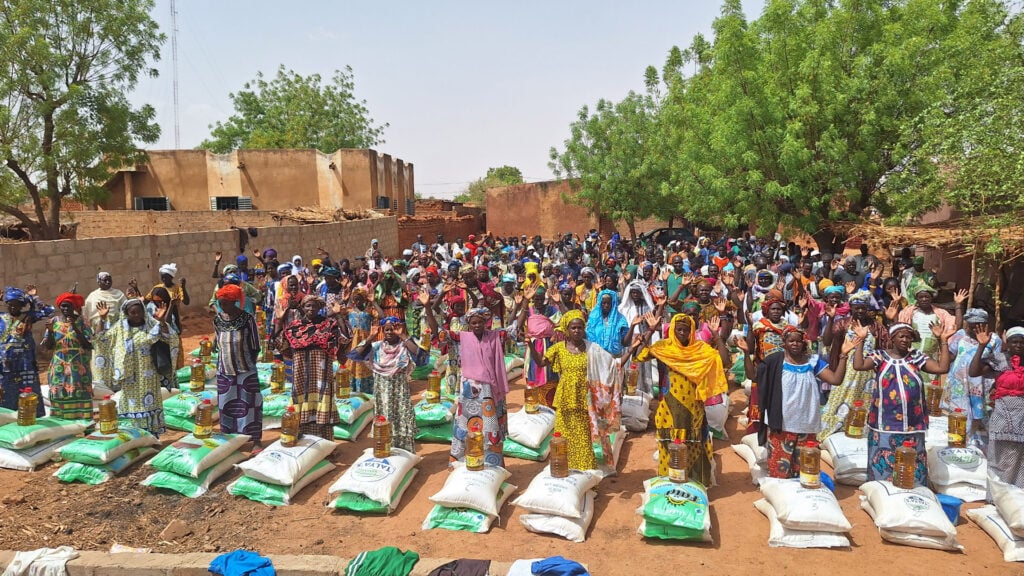
Reverend Ousmane Dolo*, a church leader in the same Mopti region, says: “The jihadists have gone from church to church demanding millions of francs. That is why we are telling you about the difficulties we are facing. The suffering is severe. There are people in our communities who no longer even have enough to eat because they have given everything they had to the jihadists. They have no food. That is why we are sharing this with you.”
Speaking out is risky
Jo Newhouse*, Open Doors’ spokesperson in the region, says: “We are deeply concerned about the impact of this reality on churches, not only economically but also psychologically and socially. Pastors and their congregations face extreme instability and uncertainty. The space for them to publicly profess and practise their faith is becoming increasingly limited. On top of that, speaking out about the challenges they face and standing up for their rights is highly risky in the current political climate.”
“These believers need our prayers now more than ever. The government of Mali and its international partners must do everything in their power to protect the Christian minority from exploitation by jihadists, and thereby help preserve social cohesion. This is essential to the well-being of any nation.”
Political instability
The government of Mali guarantees freedom of religion and belief. Unfortunately, the reality in the country tells a different story. Christian communities in Mali are facing increasing persecution amid rising insecurity, jihadist violence and political instability.
Mali was once regarded as a country characterized by relative religious tolerance and democratic progress. However, the 2012 uprising and subsequent military coups created a security vacuum that allowed jihadist groups to gain control over large areas.
The withdrawal of French troops and the UN peacekeeping mission further weakened security, while abuses by security forces have increased fear and instability. Islamist groups such as Jama’at Nasr al-Islam wal-Muslimin (JNIM) and the Islamic State in the Greater Sahara (ISGS) have expanded their influence across large parts of the country. They attack and abduct Christians and destroy church buildings.
Limited protection
Evangelical pastors, church leaders and converts from Islam are especially vulnerable and are often accused of being influenced by Western interests. Converts are frequently rejected by their families and face threats from extremist groups.
The threat is compounded by weak state institutions, corruption, organized crime and the spread of armed extremist networks. In many rural areas, Christians have little protection and face pressure from both militants and local communities.
Christians are currently facing increasing restrictions, displacement and violence. Although some freedom of worship remains in major cities, many believers, particularly in conflict-affected areas, live under constant threat and uncertainty about their future.
Please pray for the church in Mali
- Pray for steadfast faith and strength for the congregations and church leaders whose churches have been closed.
- Pray for the reopening of the churches that have been closed.
- Pray for the people who have fled the violence in central and southern Mali.
- Pray that the Malian government will be able to intervene in these areas.
- Pray that churches will be exempted from paying taxes and that they will receive the resources they need to survive until this happens.
- Pray for the persecutors. Pray that every person in Mali may come to know that Jesus Christ is the Way, the Truth and the Life.
Mali ranks 15th on the World Watch List.