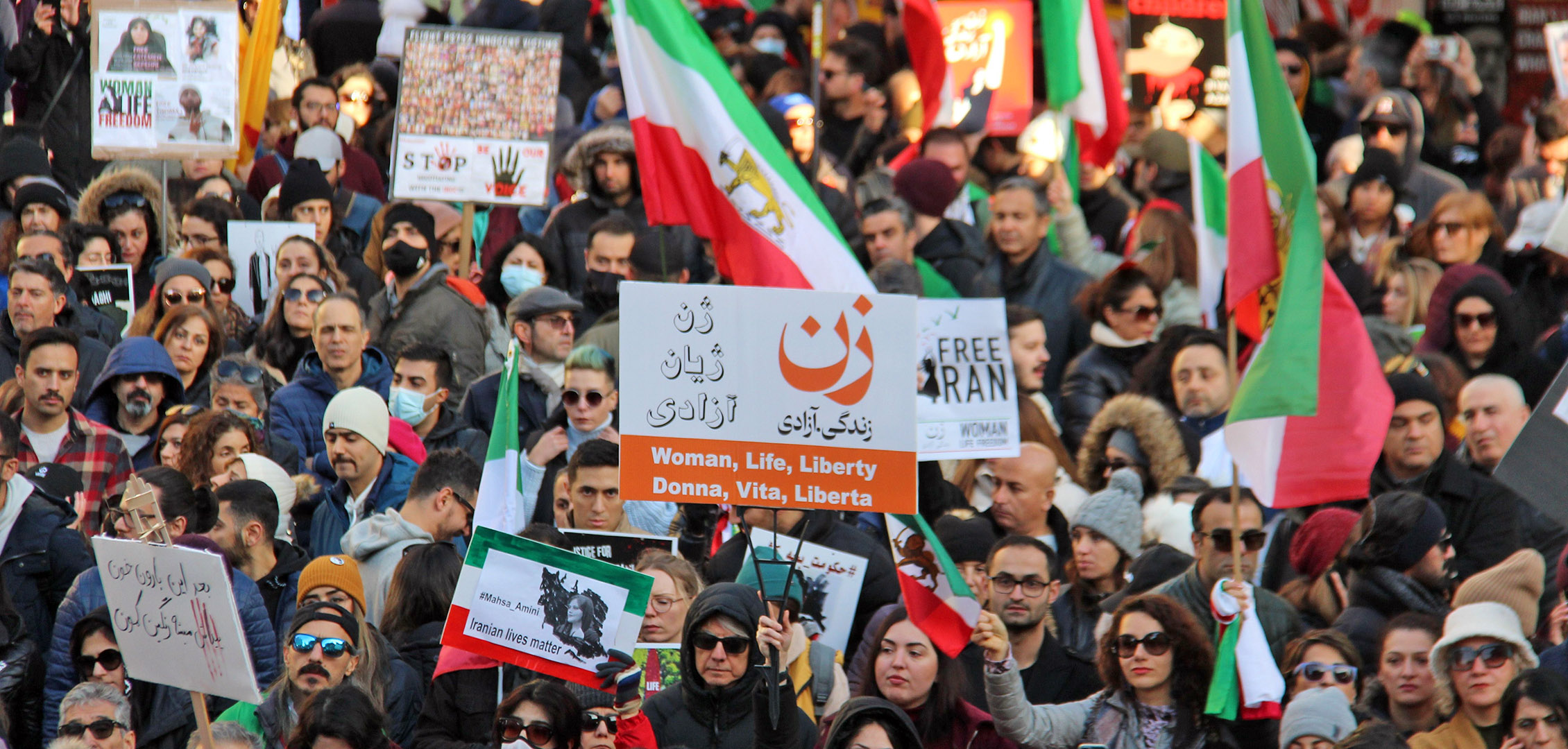
The framework agreement currently under negotiation between the United States and Iran leaves key questions unanswered regarding Iran’s internal political direction and the status of minority communities within the country. An Iranian adviser to Open Doors warned: “If ‘non-interference’ merely means that Western governments will cease to speak out on human rights, religious freedom, prisoners of conscience, and the persecution of converts, the agreement could provide greater stability for the regime while leaving ordinary citizens even more vulnerable.”
Peace without justice
A final agreement between the United States and Iran could bring an end to the armed conflict and ease the economic pressure on Iran. At the same time, however, a deal with the Islamic Republic may pave the way for increased pressure on Iranian Christians and the continuation of state control and surveillance in the months and years ahead.
For Christian converts and other minority communities in Iran, the central question is whether future negotiations will address not only security, sanctions relief, and nuclear policy, but also issues such as human rights, religious freedom, and the protection and recognition of minorities.
“The international community should not confuse diplomatic silence with justice.”
Pressure on minorities
Ramin*, an Iran adviser for Open Doors and himself an Iranian Christian, commented: “As someone closely connected to the church in Iran, I welcome any step that genuinely reduces war, fear, and suffering for ordinary Iranians. Peace is always preferable to bombardment, and the Iranian people have already paid an extraordinarily high price for the decisions of their leaders and the policies of foreign powers.”
“However, I would be very cautious about celebrating the Islamabad Memorandum. The proposed reconstruction assistance could help ease economic pressures, provided that it reaches ordinary citizens in a transparent and accountable manner. “But if large flows of money enter Iran without adequate oversight and accountability, they may also strengthen the patronage networks, security institutions, and propaganda systems that have long been used against civil society, women, minorities, and Christian converts. Forty-seven years of experience with the Islamic Republic suggest that this second scenario is more consistent with the regime’s established pattern of behavior.”
The continuing reality of Christian persecution
“For the church in Iran, the memorandum does not automatically mean freedom. Instead, it could signal a less visible but more consolidated form of pressure. The international community should not confuse diplomatic silence for justice.”
“Christians in Iran are not persecuted because the United States interferes in Iran’s affairs. They are persecuted because the Islamic Republic views conversion, house church gatherings, discipleship, and the Christian way of life as threats to national security. Any agreement that ignores this reality risks reinforcing the very structures that criminalize the peaceful practice of the Christian faith.”
“”Whatever the outcome, we pray that Christians and other minorities in Iran will not be forgotten or ignored amid ongoing political developments and international negotiations.””
“The true test of this agreement will not be whether governments shake hands, but whether prisoners are released, families are protected, house church believers are no longer treated as criminals, and all Iranians are granted freedom of conscience.”
Peace and justice
“My hope is for peace. My concern is that peace without justice may become another word for silence,” Ramin concludes. “Whatever the outcome, we pray that Christians and other minorities in Iran will not be forgotten or overlooked amid political developments and international negotiations. May God’s will be done, may His justice shine forth, and may His peace surround the people of Iran.”
Iran ranks 10th on the World Watch List.